disaster response
DeliveredDuty Officer in a Day
Single-day training program for Red Cross Disaster Duty Officers managing the full event lifecycle remotely
87
Training Slides
<15 min
Target Dispatch Time
24/7
Coverage Continuity
5
Event Lifecycle Phases
Train volunteer leaders to manage the entire disaster response lifecycle remotely: receiving 1-800-RED-CROSS notifications, coordinating field teams, and closing events, all through RC Respond as their primary operational platform.
- Duty Officers must manage multiple simultaneous events while maintaining quality oversight of each
- The role requires mastery of RC Respond for event creation, team dispatch, status tracking, and closure
- Officers must distinguish between active events requiring immediate response and past events needing documentation
- Remote coordination demands clear communication protocols because Officers can't see what responders see on scene
- Escalation decisions (when to activate additional resources) carry significant operational and financial implications
- 24/7 shift coverage requires standardized handoff procedures to maintain continuity across officer transitions
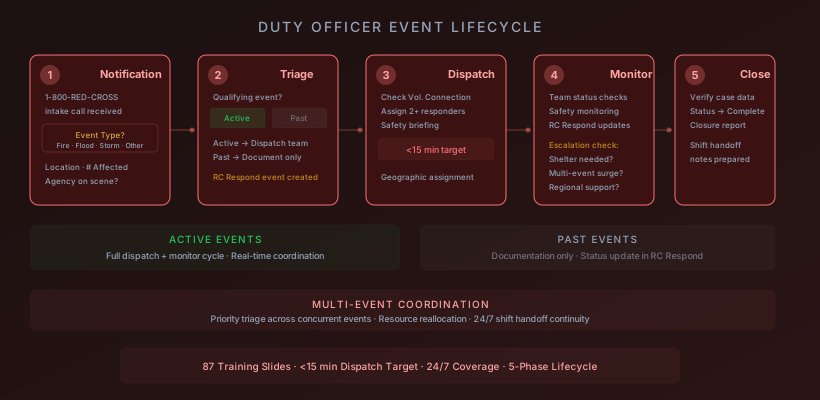
Analyzed the complete Duty Officer workflow from notification receipt through event closure, then designed training that mirrors the actual decision sequence Officers face during shifts.
Notification Flow Analysis
Mapped the complete notification pipeline from 1-800-RED-CROSS call intake through Duty Officer receipt, event creation in RC Respond, and team dispatch. Identified the critical decision point: Does this event qualify for DAT response? Documented the criteria Officers use to triage notifications and the information they need to dispatch appropriate teams.
Active vs. Past Event Separation
Designed the curriculum around a key cognitive framework: separating active event management (dispatch, monitoring, coordination) from past event documentation (status updates, case review, closure). This distinction reduced cognitive overload during training and mirrors how experienced Officers actually manage their workflow in RC Respond.
RC Respond System Training
Built detailed walkthrough modules for RC Respond event management: creating new events, assigning responders, monitoring team status (On Scene, Off Scene, Complete), updating event details, and generating closure reports. Each module uses the actual RC Respond interface so Officers practice with the real tool.
Escalation Protocol Design
Developed decision frameworks for when events exceed standard DAT capacity. Training covers activation triggers for shelter operations, mass feeding, damage assessment teams, and regional support. Officers learn to recognize the signs early and initiate escalation before response gaps develop.
An 87-slide training program that prepares volunteer leaders to serve as the operational hub of disaster response, managing notifications, dispatching teams, and coordinating the full event lifecycle through RC Respond.
Event Triage Framework
Structured decision model for evaluating incoming notifications: qualifying event criteria, resource assessment, and appropriate response level determination. Officers learn to make rapid, consistent triage decisions.
Team Dispatch Protocols
Step-by-step procedures for assembling and dispatching DAT teams, including responder availability checks through Volunteer Connection, geographic assignment logic, and pre-dispatch safety briefing requirements.
Remote Safety Monitoring
Protocols for monitoring responder safety from a remote position: required check-in intervals, status update expectations, and escalation triggers when teams report hazardous conditions or go silent.
Multi-Event Coordination
Techniques for managing multiple simultaneous events during surge periods, including priority triage, resource reallocation, and communication protocols to keep all teams informed and safe.
Shift Handoff Procedures
Standardized handoff templates and protocols that maintain continuity across 24/7 Officer transitions. Covers active event status summaries, pending actions, and any safety concerns requiring ongoing monitoring.
Active vs. past event separation reduces cognitive overload
Teaching Officers to mentally separate real-time management from documentation tasks improved multi-event handling during surge periods.
Standardized handoff templates prevent information loss
Pre-built shift handoff forms ensured no active events fell through the cracks during 24/7 Officer transitions.
87
Training Slides
<15 min
Target Dispatch Time
24/7
Coverage Continuity
5
Event Lifecycle Phases