disaster response
Curriculum DesignDamage Assessment in a Day
Single-day training curriculum covering the FEMA-aligned property damage classification system and door-to-door assessment protocols for Red Cross volunteers
45
Training Slides
4
FEMA Damage Tiers
5
Assessment Phases
72 hr
Client Contact Standard
Teach volunteers the FEMA-aligned property damage classification system and door-to-door assessment protocols while ensuring their safety near structurally compromised buildings, and connect assessment findings to the Client Care Program eligibility process.
- The four-tier FEMA classification system (Destroyed, Major, Minor, Affected) requires consistent application across assessors with varying construction knowledge
- Door-to-door assessments expose volunteers to hazards including structural instability, electrical risks, gas leaks, and contaminated floodwater
- Documentation must be thorough enough to support Client Care Program eligibility decisions and potential FEMA coordination
- Assessments must balance speed with accuracy because displaced families are waiting for assistance determinations
- Photographic evidence standards must be clear and consistent so that supervisors and case managers can verify classifications remotely
- The 72-hour client contact standard requires efficient assessment workflows that connect field data to RC Care case management
Built the curriculum around the actual assessment workflow, from team dispatch through property classification and RC Care documentation, with safety protocols embedded at every decision point.
Classification Framework Design
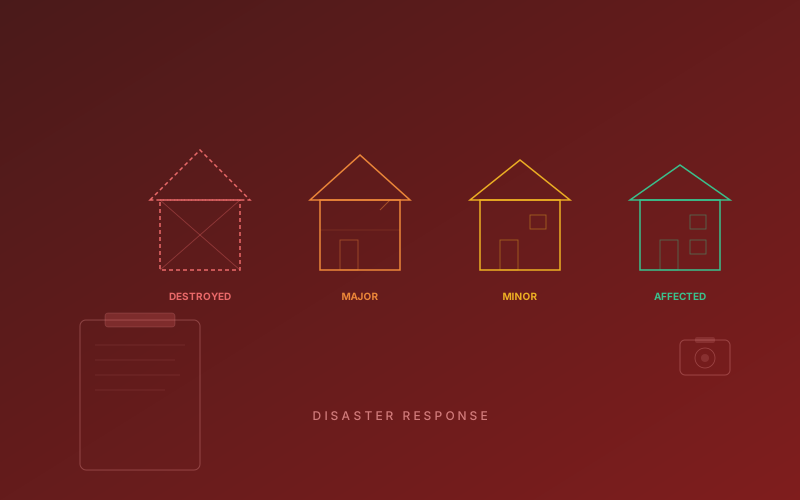
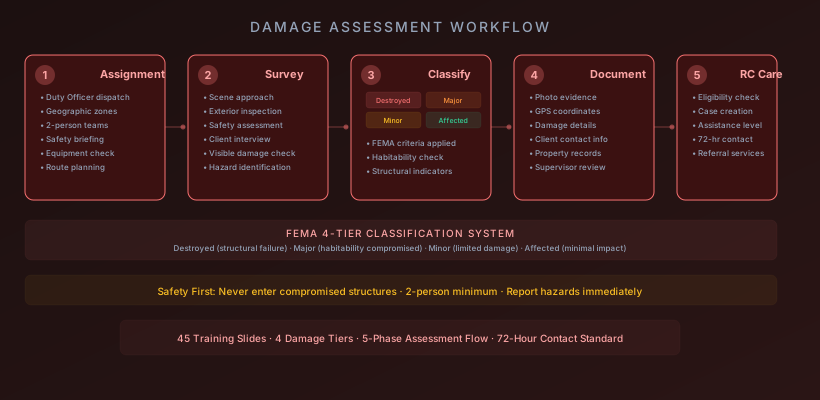
Developed training materials for the FEMA four-tier system with clear visual examples and decision criteria for each classification level. Created side-by-side comparison materials showing the distinguishing characteristics between tiers: Destroyed (complete structural failure, uninhabitable), Major (significant structural or utility damage, habitability compromised), Minor (limited damage, habitable with repairs), and Affected (minimal damage, fully habitable). Each tier includes photographic reference examples from actual disaster assessments.
Field Protocol Sequencing
Structured the door-to-door assessment protocol in the sequence volunteers will actually follow in the field. Training progresses from scene approach and exterior safety assessment (never enter a compromised structure), through visible damage evaluation from safe vantage points, client interview techniques, and systematic documentation. Each step includes specific safety checkpoints and decision criteria for when to skip a property and report hazards.
Documentation Standards Training
Created comprehensive training on photographic and written documentation requirements. Volunteers learn standardized photo angles (four exterior sides, visible damage details, address confirmation), GPS coordinate recording, and structured damage narrative writing. Emphasized that documentation quality directly affects Client Care eligibility determinations and may be reviewed by supervisors, case managers, and coordinating agencies.
Safety Integration Throughout
Embedded safety training at every phase of the assessment workflow rather than isolating it in a standalone module. Volunteers learn hazard identification specific to different disaster types: fire-damaged structures (collapse risk, hot spots, toxic residue), flood-damaged properties (contaminated water, mold, electrical hazards), and storm damage (unstable debris, downed power lines, compromised roofing). The two-person minimum rule and immediate hazard reporting protocols are reinforced throughout.
A 45-slide single-day training program designed to prepare volunteers for systematic property damage assessments using the FEMA four-tier classification system, with integrated safety protocols and RC Care documentation.
Four-Tier Classification Training
Visual-heavy training on the FEMA damage classification system with photographic examples, decision trees, and practice exercises. Volunteers learn to consistently distinguish between Destroyed, Major, Minor, and Affected categories using structural indicators, habitability criteria, and utility status. Includes calibration exercises to ensure assessment consistency across teams.
Door-to-Door Assessment Protocols
Step-by-step field procedures for conducting property assessments: approach safety check, exterior evaluation from safe distance, client contact and interview, systematic damage documentation, and departure procedures. Training covers techniques for assessing damage without entering compromised structures and for interviewing residents who may be in distress.
Photographic Documentation Standards
Standardized photo documentation training covering required angles, damage detail capture, address confirmation shots, and GPS coordinate recording. Volunteers learn to create visual evidence packages that support remote classification verification and Client Care eligibility review.
Safety Procedures for Compromised Structures
Hazard-specific safety training for the three most common disaster damage types: fire (structural collapse, residual heat, toxic materials), flooding (contaminated water, mold, electrical hazards), and storms (unstable debris, downed lines, compromised roofs). Reinforces the absolute rule: never enter a damaged structure during assessment.
RC Care Eligibility Connection
Training on how assessment classifications connect to Client Care Program assistance levels. Volunteers learn how their damage tier determination directly affects the financial assistance and recovery resources available to affected families, reinforcing the importance of accurate and thorough assessments. Includes the 72-hour client contact standard and referral service protocols.
Visual calibration exercises prevent classification drift across teams
Having multiple volunteers independently classify the same photo set and discuss differences produced significantly more consistent field assessments than lecture-based training alone.
Safety scenarios must match the specific disaster type volunteers will encounter
Generic safety training was less effective than hazard-specific modules (fire vs. flood vs. storm) because each disaster type presents different risks that require different recognition skills.
45
Training Slides
4
FEMA Damage Tiers
5
Assessment Phases
72 hr
Client Contact Standard