higher education
Curriculum DesignCOMM301: Interpersonal Communication
Designing a 16-week face-to-face course for online delivery without losing what made it work

16
Week Course Redesign
5
ADDIE Phases Applied
4
Interactive Module Types
100%
Online Delivery
Experience the interactive course demo
View Course DemoConvert a traditional 16-week face-to-face interpersonal communication course to an online format while maintaining student engagement and learning outcomes.
- Existing course relied heavily on in-person role-playing and group discussions
- Faculty concerns about losing the human connection essential to communication skills
- Need to accommodate diverse student schedules and learning preferences
- Limited technology experience among some faculty members
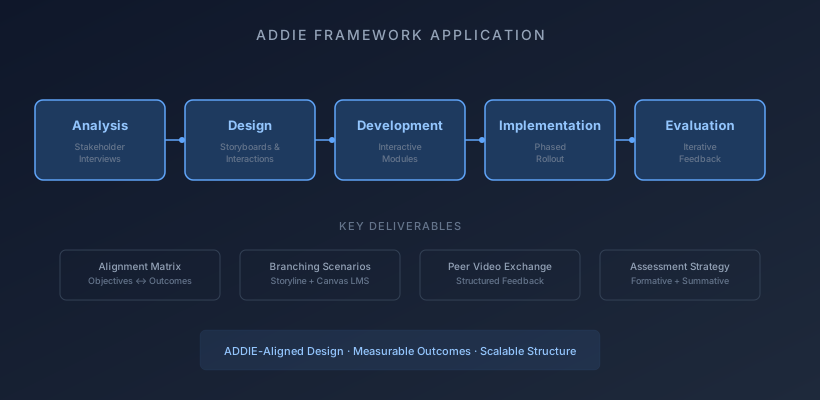
Applied ADDIE framework with iterative stakeholder feedback to keep learning objectives and delivery methods in sync.
Analysis
Conducted stakeholder interviews with faculty, reviewed existing course materials, and analyzed student feedback from previous semesters to identify key pain points and opportunities.
Design
Created detailed storyboards and interaction designs for each module, focusing on opportunities for peer interaction and self-reflection activities.
Development
Built interactive modules with branching scenarios, video-based practice exercises, and discussion prompts integrated with Canvas LMS.
Implementation Planning
Designed phased rollout plan with built-in feedback mechanisms for iterative improvements based on student and faculty input.
A blended learning approach combining asynchronous multimedia modules with synchronous virtual practice sessions.
Interactive Scenario Learning
Branching scenarios allow students to practice communication skills with immediate feedback in realistic workplace situations.
Peer Video Exchange
Students record and share communication practice videos, providing structured peer feedback using provided rubrics.
Reflection Journals
Guided weekly reflections help students connect course concepts to personal communication experiences.
Virtual Office Hours
Scheduled synchronous sessions for live Q&A and role-playing practice with instructor facilitation.
Faculty buy-in requires early and continuous involvement
Including faculty in design decisions from day one is structured to reduce resistance and improve adoption rates across all sections.
Asynchronous discussion needs structure to succeed
Discussion rubrics and response frameworks are designed to increase meaningful peer interaction compared to open-ended prompts.
16
Week Course Redesign
5
ADDIE Phases Applied
4
Interactive Module Types
100%
Online Delivery